


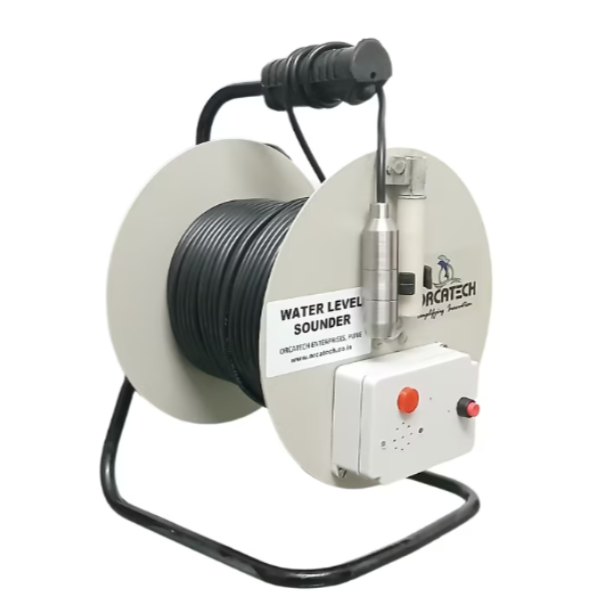
Groundwater beneath an industrial site can influence excavation safety, foundation performance, dewatering requirements, slope stability, contamination studies, and regulatory reporting. Industrial Piezometer Monitoring provides engineers with structured information about subsurface water pressure or groundwater elevation at selected locations.
A piezometer is installed to measure hydraulic head at a particular depth or within a specific geological layer. When readings are collected over time, engineers can determine how groundwater conditions respond to rainfall, pumping, construction, seasonal changes, or industrial operations.
What Does a Piezometer Measure?
Depending on its design, a piezometer may measure water level in an observation tube or pore-water pressure within soil and rock. The result can be expressed as water elevation, depth below a reference point, or pressure.
This differs from simply checking whether water is present in a borehole. Proper monitoring uses a documented reference level and repeatable measurement method so readings from different dates can be compared accurately.
Piezometers may be monitored manually, automatically, or through a combination of both. Automated systems use sensors and data loggers to record readings at configured intervals.
Why Industrial Projects Need the Data
Subsurface water affects different facilities in different ways. A manufacturing plant planning a basement may need groundwater information for excavation and waterproofing design. A mining or quarry operation may monitor water pressure near slopes. An environmental consultant may use piezometers to understand groundwater movement around a potentially affected area.
Typical applications include:
- Construction dewatering assessment
- Foundation and basement planning
- Slope-stability monitoring
- Dam and embankment observation
- Landfill monitoring
- Contaminated-site investigations
- Industrial groundwater studies
- Pumping-impact assessment
- Environmental compliance programmes
The readings support engineering judgement, but they should be interpreted alongside geology, borehole logs, rainfall, pumping records, and site activity.
Selecting Monitoring Locations
The number and position of piezometers should be based on the questions the project needs to answer. Installing instruments only where access is convenient may produce an incomplete picture.
Engineers may need locations upstream and downstream of groundwater flow, near excavation zones, around critical structures, or at varying depths. Nested instruments can help distinguish conditions in separate subsurface layers.
A monitoring plan should document:
- The purpose of each location
- Installation depth
- Screened interval
- Ground elevation
- Reference-point elevation
- Sensor range
- Reading frequency
- Expected water-level variation
- Data-review responsibility
This information is necessary for interpreting results correctly throughout the project.
Manual Readings Compared with Automated Monitoring
Manual measurements are straightforward and remain valuable for spot checks. However, they represent isolated moments and require site access. Automated recorders capture fluctuations between visits and can reveal responses that would otherwise go unnoticed.
A blended approach is often effective. Automated sensors provide continuous records, while periodic manual measurements verify that instruments remain accurate.
Telemetry can further support sites where readings need to be reviewed quickly. It allows project teams to check data remotely and investigate unusual changes without waiting for the next scheduled visit.
Pune-Specific Monitoring Considerations
Industrial and infrastructure development around Pune includes sites with varied terrain, geology, groundwater dependence, and monsoon exposure. Water levels may change significantly between dry months and the rainy season. Construction activity and local pumping can introduce additional variation.
For this reason, a short monitoring period may not represent long-term conditions. Where project schedules allow, observations should cover relevant seasonal transitions. Rainfall data should also be compared with groundwater records to identify delayed recharge or rapid responses.
Building a Dependable Monitoring Programme
Reliable Industrial Piezometer Monitoring requires more than installing instruments. Teams must protect installations from damage, verify survey references, inspect cables and enclosures, review unusual readings, and maintain calibration records.
Data should be checked for abrupt steps, prolonged flat lines, unexplained drift, and gaps. These patterns may indicate a real site event, but they can also signal equipment or installation problems.
When monitoring objectives, instrument placement, verification, and analysis are aligned, piezometer data becomes a practical engineering resource. It helps project teams understand subsurface conditions, manage uncertainty, and make decisions using measured evidence rather than assumptions.


