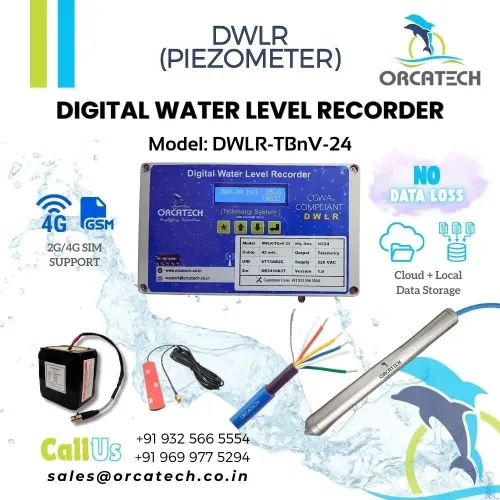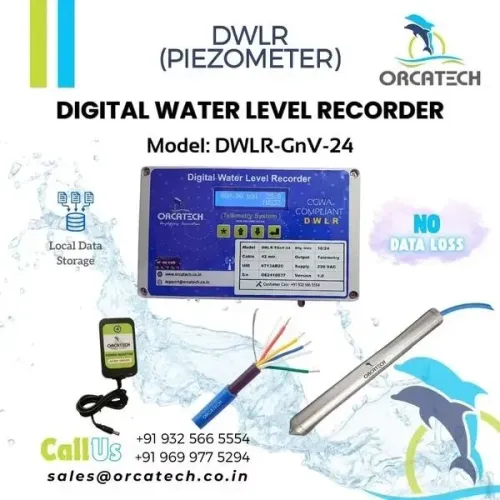
Groundwater plays a vital role in agriculture, industrial operations, infrastructure development, and urban planning. As demand for water continues to increase across Pune and other parts of Maharashtra, organizations are looking for smarter ways to monitor groundwater levels accurately. A Groundwater Digital Water Level Recorder (DWLR) has become an essential solution for collecting continuous water level data without depending on manual observations.
Whether the project involves irrigation, environmental studies, mining, industrial facilities, or government water resource management, automated monitoring provides reliable information that supports better decision-making.
What Is a Groundwater Digital Water Level Recorder?
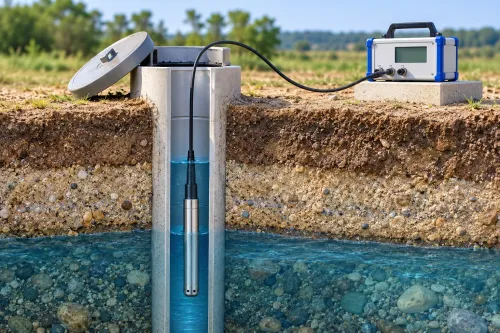
A Groundwater Digital Water Level Recorder is an electronic monitoring device installed inside borewells, observation wells, or piezometers. It measures changes in groundwater levels at predefined intervals and stores the information digitally for future analysis.
Unlike manual water level measurements that require regular site visits, a DWLR continuously records data throughout the day, providing a much clearer picture of groundwater behaviour.
Modern systems can also transmit information remotely, allowing engineers and authorities to access measurements from virtually anywhere.
Why Continuous Monitoring Matters
Groundwater levels rarely remain constant. They fluctuate because of rainfall, groundwater extraction, seasonal variations, nearby construction, industrial usage, and recharge conditions.
Continuous monitoring helps identify:
- Seasonal groundwater trends
- Recharge after rainfall
- Declining water tables
- Pumping impacts
- Aquifer behaviour
- Long-term groundwater availability
This information helps organizations make informed operational and environmental decisions rather than relying on occasional manual readings.
Applications Across Different Industries
Groundwater Digital Water Level Recorders support a wide range of sectors.
Water Resource Departments
Government agencies use monitoring networks to understand aquifer health and support sustainable groundwater management.
Infrastructure Projects
Metro rail projects, bridges, tunnels, highways, and large construction developments monitor groundwater conditions before and during construction.
Environmental Monitoring
Environmental consultants evaluate groundwater conditions during environmental impact assessments and compliance studies.
Mining Operations
Mining projects require continuous groundwater observations to assess dewatering activities and surrounding environmental conditions.
Agriculture
Large irrigation projects benefit from groundwater monitoring to understand recharge patterns and optimize water usage.
Industrial Facilities
Manufacturing plants use groundwater monitoring for compliance, water management, and operational planning.
Advantages Over Manual Monitoring
Traditional monitoring methods require personnel to visit every observation well regularly. This process consumes time and often results in limited datasets.
Automated systems provide several advantages.
- Continuous measurements throughout the day
- Reduced manual intervention
- Improved measurement consistency
- Better long-term data records
- Faster access to groundwater trends
- Lower operational costs over time
- Improved reporting accuracy
These advantages become increasingly valuable for projects involving multiple monitoring locations.
Features to Look for in a Modern DWLR
Selecting the right monitoring system involves more than choosing a sensor.
Important considerations include:
- High measurement accuracy
- Long battery life
- Durable construction for field conditions
- Data logging capability
- Remote communication options
- Easy calibration
- Reliable software compatibility
- Low maintenance requirements
The right combination of these features supports dependable performance over extended monitoring periods.
Supporting Smarter Water Management
Data collected from groundwater monitoring systems can be used for:
- Water resource planning
- Aquifer studies
- Environmental compliance
- Irrigation management
- Infrastructure safety assessments
- Research projects
- Flood and drought preparedness
Instead of making decisions based on assumptions, organizations can use historical trends and real-time measurements to improve planning.
Why Monitoring Is Becoming More Important in Pune
Pune has experienced significant industrial growth, expanding infrastructure, and increasing urban development. These factors place additional pressure on groundwater resources.
Many public agencies, consultants, and industries now recognise the importance of continuous groundwater monitoring for maintaining sustainable water management practices. Reliable data supports planning while helping organizations comply with environmental requirements and project specifications.
Choosing a Reliable Monitoring Partner
The quality of monitoring data depends not only on the equipment but also on system design, installation, calibration, and long-term support.
Manufacturers with experience in water monitoring technologies understand the practical challenges faced across industrial sites, environmental projects, and government monitoring networks.
Orcatech Enterprises develops groundwater monitoring solutions that support accurate data collection for diverse applications. Information about its monitoring technologies is available through the company's website, orcatech.in, where engineers and project teams can explore suitable solutions for their operational requirements.
As groundwater management becomes increasingly data-driven, investing in a dependable Groundwater Digital Water Level Recorder helps organizations build stronger monitoring programs that support informed decision-making, regulatory compliance, and long-term resource sustainability.
Keywords